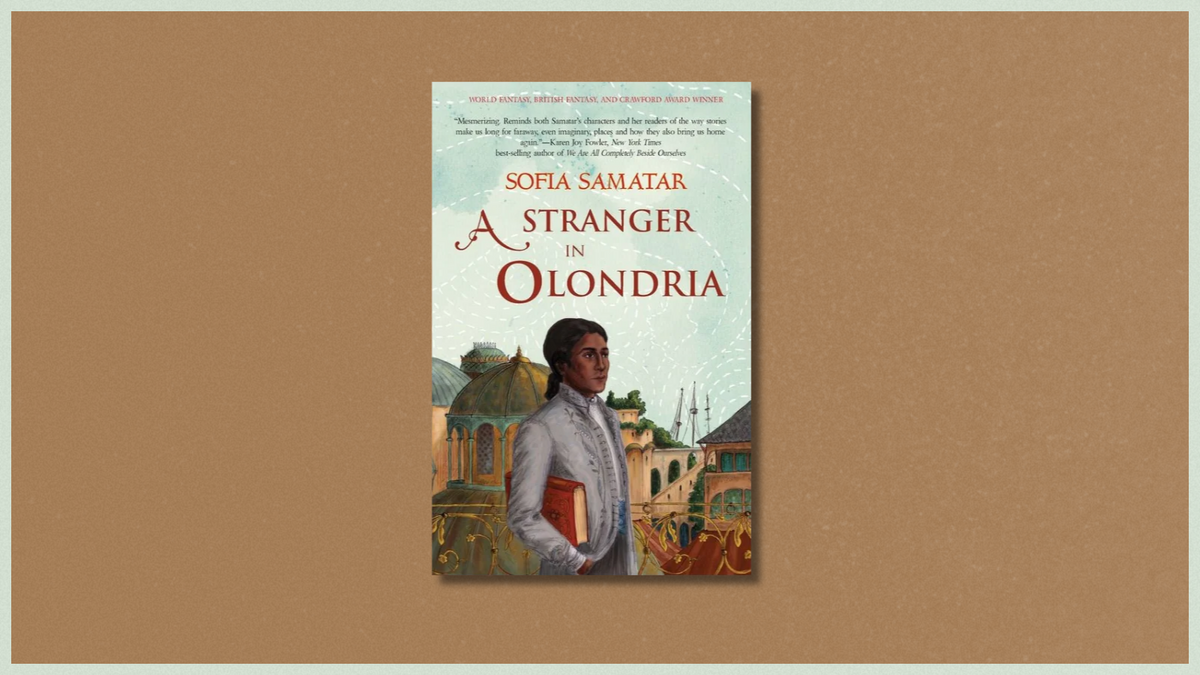
A Stranger in Olondria is a beautiful book, a work of art. Read only a chapter and it is evident that Samatar spent nearly a decade revising her first draft. The worldbuilding is phenomenal. Customs, cultures, and societies and their histories feel alive and lived in. The cultural worldbuilding is reminiscent of the deep, textured work that Le Guin did.
Veteran readers of fantasy will appreciate the nontraditional setting of the story. Rather than a vaguely European clime, A Stranger in Olondria seems, to my untrained eye, to have taken inspiration from the broader Mediterranean region (Ottoman Empire perhaps Northern Africa). As a lifelong fantasy fan who has read countless books set in that vague Europe–and I should note, still loves and enjoys them–I find intense pleasure in reading accomplished works which take their inspiration from cultures and environments I’m less familiar with. With books like A Stranger in Olondira I’m reminded of the sense of wonder and awe that so drew me to speculative fiction as a child.
Despite that persistent sense of wonder and a well-told, meaningful story, there were moments where the book dragged for me. So soon after completing the book, I’ve yet to identify the cause. Evaluating the book’s components, I “should” have loved every moment. Perhaps on those days my mind was simply busy elsewhere, consumed with some other aspect of daily life. I’d be curious to hear if other readers experienced a similar drag with portions of this book.
You will like this book if:
- You'd like to explore the power of names and collective memory
- Revenge and overthrow-of-tyrant arcs appeal to you
⭐ 7 out of 10 vallons